
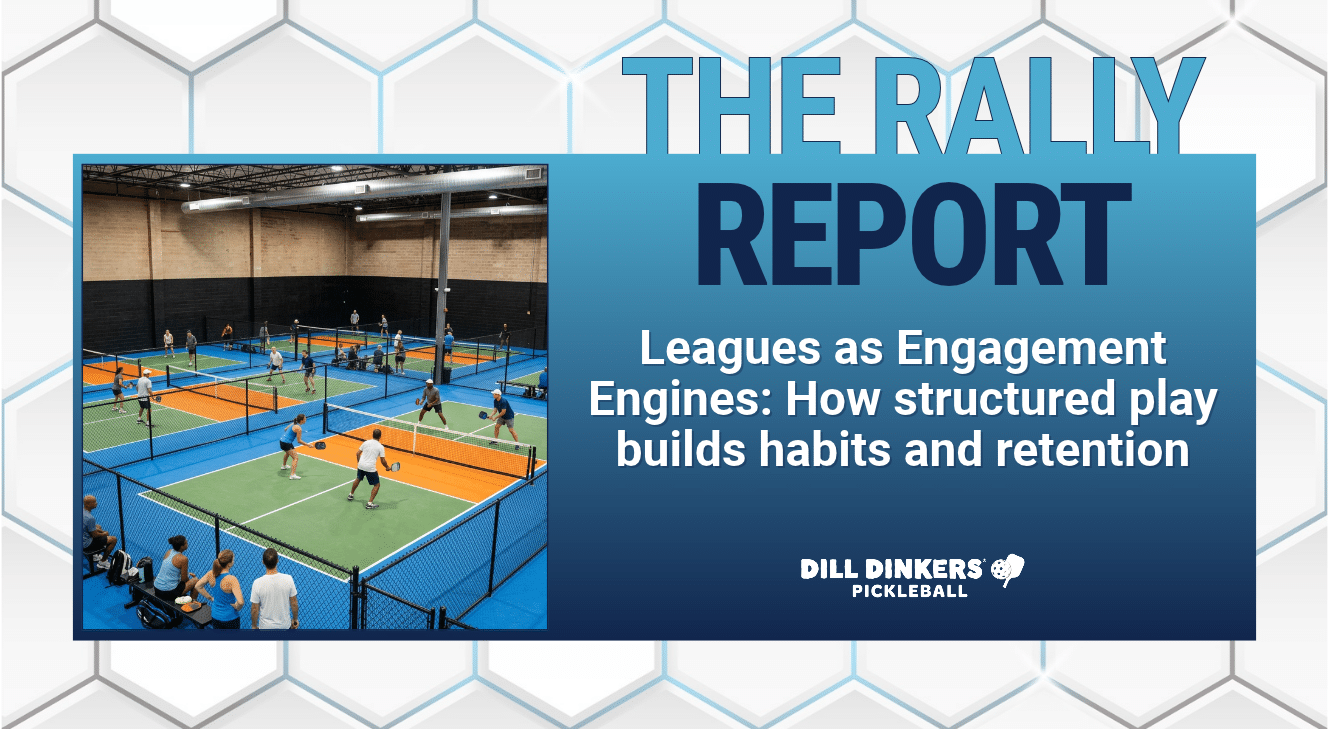
Why structured play keeps players coming back
Leagues are often viewed as a competitive offering, but their value extends far beyond standings and scores. For pickleball clubs, leagues can become one of the most effective ways to increase participation, strengthen community, and encourage long-term engagement.
When people have a consistent place to play and familiar faces to see each week, participation becomes easier to maintain. Instead of deciding when and how to play, players simply show up and become part of an established routine. That consistency is what makes leagues such a powerful engagement tool.
How Do Leagues Increase Player Retention?
One of the biggest challenges for any recreational activity is helping people turn initial interest into a lasting habit. A player may enjoy their first clinic, open play session, or social event, but what gives them a reason to come back next week? Leagues help answer that question.
A scheduled weekly commitment removes much of the effort involved in planning participation. Players know when they are playing, who they will be playing with, and what to expect. As a result, participation becomes part of their regular schedule rather than an occasional activity.
For many players, consistency is more important than competition. Having a recurring place on the calendar creates momentum that can keep people engaged long after the excitement of trying something new wears off.
How Leagues Create Accountability
Leagues naturally encourage players to stay involved because other people are counting on them.
Whether someone is paired with a partner, assigned to a team, or simply expected to show up for weekly matches, there is a social commitment that makes participation feel more meaningful. That accountability helps players remain active even when life gets busy.
The benefit is not just attendance. Over time, players build relationships with the people they see each week. Those relationships often become one of the strongest reasons to stay engaged.
Many players begin by signing up for a league, but they remain involved because they become connected to the community around it.
Can Leagues Help Players Improve?
Yes. One of the reasons leagues remain popular is that they provide regular opportunities for growth.
Every match gives players a chance to apply skills, gain experience, and build confidence. Progress becomes easier to see when players participate consistently against others with similar skill levels.
Unlike occasional play, leagues offer a structured environment where improvement happens naturally through repetition. Players can track their development over time while enjoying the social side of the game.
This often creates additional engagement opportunities. Players who want to improve further may explore clinics, lessons, drills, or other programs that support their goals.
Why Leagues Strengthen Club Communities
A successful league does more than organize matches. It creates a sense of belonging.
When players interact with the same group week after week, they become more comfortable, more connected, and more invested in the club experience. Familiarity leads to friendships, and friendships create stronger participation habits.
League players frequently become some of the most engaged members of a club community. They are often the first to join events, participate in clinics, invite friends, and support new players.
Because of this, leagues can have a positive impact well beyond the matches themselves. They help strengthen the overall culture of a facility and create connections that encourage continued involvement.
What Makes a Successful Pickleball League?
The most successful leagues focus on creating a positive player experience.
Strong leagues typically include:
- Clear communication and expectations
- Consistent scheduling
- Fair and appropriate skill-level grouping
- Welcoming and inclusive environments
- Opportunities for both competition and social interaction
When leagues are easy to understand and enjoyable to participate in, players are more likely to return season after season.
The Long-Term Value of Leagues
The impact of a league does not end when a season concludes. In many cases, the relationships, habits, and routines built during league play continue long afterward.
Players who feel connected to a community and confident in their place within it are more likely to stay involved in the sport. They continue participating in programs, attending events, and seeking new opportunities to play.
That is why leagues can be much more than a programming option. They create structure, encourage consistency, and help transform occasional players into engaged community members.
For clubs focused on long-term growth, leagues are not simply about competition. They are one of the most effective ways to build habits, strengthen connections, and keep players coming back.
Searching for pickleball courts near you? Dill Dinkers offers leagues for players of all skill levels. Discover a club near you, connect with other players, and find a league that fits your schedule.
Explore locations and leagues: Find a Dill Dinkers Club
Comments