
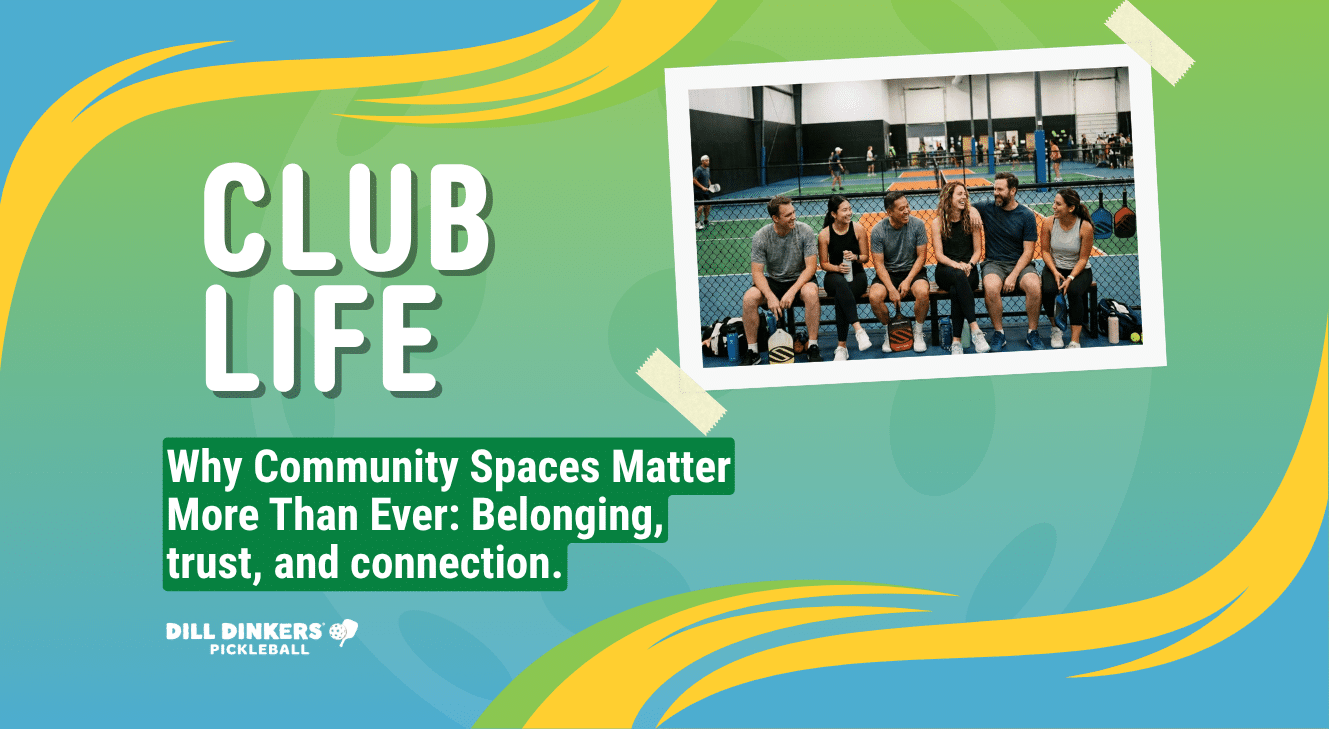
A neighborhood gathering place, local coffee shop, recreation center, or indoor pickleball club can give people something technology cannot fully replace: genuine human connection. These spaces create opportunities to build relationships, develop trust, and feel part of something bigger than ourselves.
As people search for ways to improve their well-being, find local activities, and build stronger social connections, community spaces continue to play an important role in helping people feel connected and supported.
What Is a Community Space?
A community space is any place where people can regularly come together to interact, participate, and build relationships.
These spaces can take many forms, including:
- Parks and recreation centers
- Community organizations
- Libraries
- Fitness facilities
- Sports clubs
- Local gathering places
What makes a community space meaningful is not the building itself. It is the people and relationships formed inside it. The best community spaces encourage participation, conversation, and shared experiences. They give individuals a place where they can feel welcome, recognized, and connected.
The Growing Need for Belonging
Belonging is one of the most fundamental human needs. People want to feel accepted, valued, and connected to those around them. When individuals feel like they belong, they are often more likely to be engaged, confident, and supportive of others.
Yet, many adults struggle to find opportunities to build those connections. Busy schedules, remote work, frequent moves, and increased screen time can make it difficult to establish meaningful relationships.
Community spaces help fill that gap. They create environments where people can connect naturally through shared interests and experiences. Conversations become easier. Familiar faces become friends. Casual interactions often develop into lasting relationships.
For many people, these connections become an important part of their routine and overall quality of life.
Why Trust Still Matters
Trust is built through consistency. It develops when people show up for one another repeatedly over time. It grows through shared experiences, positive interactions, and a sense of reliability. Community spaces give people opportunities to develop that trust naturally.
Seeing the same people each week, participating in activities together, and working toward shared goals can strengthen relationships in ways that rarely happen through digital interactions alone.
These trusted relationships benefit individuals and communities alike. They encourage collaboration, support, and a greater sense of security. They also create environments where people feel more comfortable trying new things, meeting new people, and becoming active participants in their local community.
The Power of Face-to-Face Connection
Online communication has many benefits, but face-to-face interactions remain incredibly valuable. A quick conversation before an activity, a shared laugh during a game, or encouragement from a friend can have a lasting impact.
These moments may seem small, but they help strengthen relationships and create a sense of connection that is difficult to replicate elsewhere. Community spaces make these interactions possible. They provide opportunities for spontaneous conversations and shared experiences that often lead to deeper connections over time.
In a world where many interactions happen through screens, in-person engagement remains one of the strongest foundations for building meaningful relationships.
How Pickleball Brings Communities Together
Few activities create community as naturally as pickleball. People of different ages, backgrounds, and skill levels can step onto the same court and enjoy the game together. That accessibility makes pickleball one of the fastest-growing ways for people to meet others and become more involved in their local community.
For many players, the benefits extend far beyond the sport itself. Pickleball creates opportunities to:
- Meet new people
- Stay physically active
- Build confidence
- Develop friendships
- Strengthen social connections
- Establish healthy routines
What starts as a game often becomes something much more meaningful. Players find familiar faces, welcoming environments, and supportive communities that encourage them to keep coming back. Over time, those regular interactions create a strong sense of belonging.
Community Improves Overall Well-Being
Strong social connections contribute to a healthier and more fulfilling lifestyle. People who feel connected to their communities often experience greater motivation, improved emotional well-being, and a stronger sense of purpose.
Community spaces support these outcomes by creating opportunities for:
- Social interaction
- Physical activity
- Lifelong learning
- Personal growth
- Shared experiences
The combination of movement, connection, and support helps people build healthier habits while strengthening relationships with those around them.
Creating Spaces Where Everyone Feels Welcome
The most impactful community spaces prioritize inclusion. They create environments where people feel comfortable participating regardless of age, experience level, or background.
Welcoming spaces encourage new relationships and help individuals feel confident joining activities, introducing themselves, and becoming part of the community.
When people feel welcome, they are more likely to return. When they return consistently, relationships grow. Those relationships help transform a group of individuals into a true community.
The Future Will Always Need Community
Technology will continue to evolve. Communication will continue to change. But the need for belonging, trust, and connection will remain constant.
People want places where they can build relationships, share experiences, and feel part of something meaningful. That is why community spaces matter more than ever.
They help people find connection in a disconnected world. They create opportunities for friendships, support, and personal growth. Most importantly, they remind us that while technology can help us stay in touch, true community is built through shared experiences and real human connection.
It may happen on a pickleball court, in a local gathering place, or through a community organization. Wherever it begins, the impact of belonging and connection continues to bring people together every day.
Comments